
What is the difference between drayage and transloading?
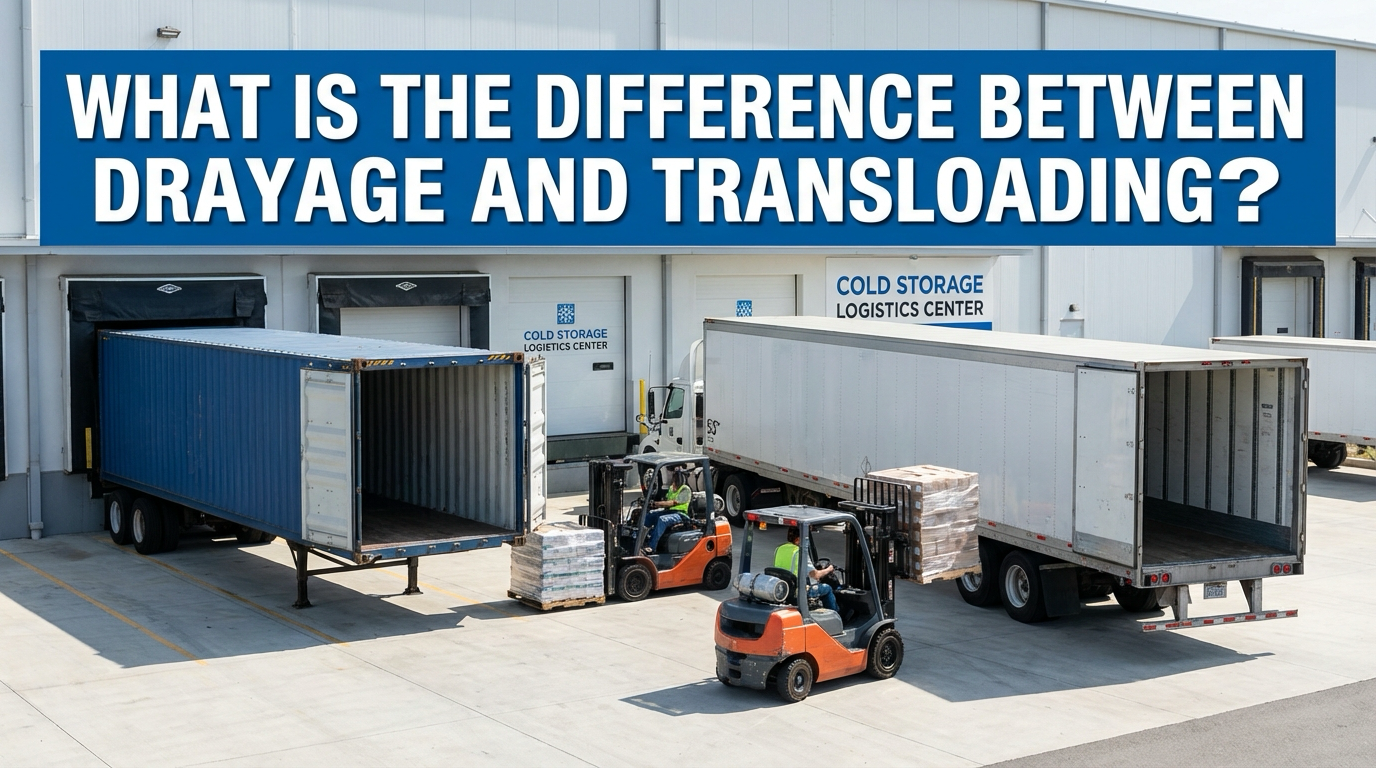
The difference between drayage and transloading lies in their strategic purpose. Drayage is the rapid, short-distance transport of an intact container, ideal for speed. Transloading involves transferring cargo from one container to another, typically a larger domestic one, optimizing for cost, volume, and distribution efficiency.
Stop Asking "Drayage or Transloading?" and Start Asking "What Bottleneck Am I Solving?"
For years, the logistics industry has framed the debate as a simple choice: drayage vs. transloading. Shippers are often led to believe they must pick one service over the other based on simplistic, per-move cost calculations. But at Auge Co. Inc, with over two decades of hands-on experience untangling complex supply chains, we've learned this is a fundamentally flawed approach. It's like a doctor asking a patient to choose between a scalpel and a cast before diagnosing the injury.
The most resilient and profitable supply chains don't start with a service; they start with a diagnosis. The right question isn't "Should I use drayage or transloading?" but rather, "What specific bottleneck is crippling my freight movement right now?" By identifying the true nature of your logistical constraint—whether it's based on time, volume, or economics—the correct solution becomes clear. These challenges are broadly defined as either congestion-based delays, caused by traffic breakdowns, or non-congestion-based delays resulting from policies or conditions according to the Federal Highway Administration. Understanding this distinction is the first step toward building a more efficient supply chain.
In this guide, we'll reframe the entire conversation. We’ll move beyond basic definitions and show you how to diagnose your specific bottlenecks to deploy these services as precise, strategic solutions that save you time, money, and headaches.
Drayage: Your Strategic Weapon Against Disruption and Time-Based Bottlenecks
First, let's establish a clear definition. In the simplest terms, drayage is the process of moving an ocean container over a short distance, typically from a port or intermodal terminal to a nearby warehouse, distribution center, or rail ramp. The crucial element is that the container itself remains intact. This movement of a container on a chassis is the essence of an intermodal drayage move, or what the industry simply calls drayage. This process is a vital link in multimodal transportation, which involves multiple modes of transport like truck, rail, and ocean carrier to move goods from shipper to consignee.
But thinking of it as just a "short-haul truck move" misses its strategic power. Drayage is your emergency response team. Its primary function is to combat time-sensitive disruptions, the most notorious of which is port congestion.
When a vessel from an ocean carrier like Maersk arrives at a congested terminal—think the Port of Los Angeles or the Port of New York and New Jersey—every hour counts. Your container is sitting at the container yard (CY) accruing fees. The two most painful are:
Demurrage: Fees charged by the terminal operator for a container that has not been moved out of the port within the allotted free time.
Detention (or Per Diem): Fees charged by the shipping line for using their container and chassis beyond the free time allowed, whether it's inside or outside the port.
When these fees are climbing daily, speed is your only defense. A skilled drayage carrier is the solution. Their job is to navigate the complexities of the port, manage appointments with the terminal operator, secure a chassis from a chassis pool (despite frequent chassis shortages), and pull your container out before those costs spiral out of control. The goal is singular: get the box out of the port and stop the clock. This direct move to your fulfillment center or warehouse is a critical component of both first mile and last mile delivery, depending on its position in your supply chain.
Pros and Cons of Drayage
Pro: Unmatched Speed for Urgent Cargo
Nothing is faster for moving an intact container from a port to a nearby facility. When lead time is critical, drayage is the answer. The core benefit of intermodal freight transport is that it reduces cargo handling, which improves security, allows freight to be transported faster, and minimizes damage as it protects the cargo within the sealed container.
Pro: Cargo Security and Integrity
Because the container remains sealed from the port to your door, the risk of product damage or loss is minimized. The original Bill of Lading (BOL) and customs clearance documents travel with a single, untouched unit.
Con: Inefficient for Long-Haul Domestic Shipping
Draying a 20-foot or 40-foot ocean container hundreds of miles inland is rarely cost-effective. The weight and dimensions are not optimized for the U.S. highway system, leading to higher fuel and transport costs compared to domestic equipment.
Con: Susceptible to Chassis Shortages and Port Constraints
The effectiveness of your drayage carrier is directly tied to the availability of chassis and the level of port congestion. During peak seasons, securing the necessary equipment can be a significant challenge, creating its own delays.
Transloading: The Strategic Answer to Volume and Geometric Bottlenecks
Now, let's shift our focus to a different kind of problem. What if your bottleneck isn't time, but physical space and volume? This is where transloading shines. So, what does transloading mean in shipping? It is the process of unloading cargo from one mode of transportation and loading it onto another. More specifically in this context, it involves moving goods out of international ocean containers (like 20’ or 40’ TEUs) and into domestic equipment, most commonly a 53-foot trailer.
This isn't just a simple transfer; it's a strategic optimization of your freight. A well-run transload facility acts as a crucial sorting and consolidation hub. It's a common practice in North America to see the contents of three 40-foot maritime containers expertly transferred into just two 53-foot domestic containers, a process that immediately creates transportation efficiency. This is the solution for geometric bottlenecks.
Consider these scenarios where transloading is the superior strategy:
Overcoming Warehouse Constraints: Many U.S. distribution centers and fulfillment centers, especially older ones, were built with loading docks designed for 53-foot trailers. An ocean container on a chassis may sit too low or high, making it difficult or impossible to unload safely and efficiently. Transloading resolves this by moving the cargo into the right-sized equipment for your facility.
Optimizing Domestic Transport: Once your goods clear the port, your goal shifts from international shipping to domestic distribution. Moving freight across the states in a 53-foot trailer is far more cost-effective for FTL (Full Truckload) shipments than using smaller ocean containers. You can fit more goods per truckload, reducing the number of drivers, trucks, and fuel needed to reach an inland destination like Chicago.
Deconsolidation and Distribution: A single ocean container may hold goods destined for multiple locations. A transload facility can perform deconsolidation, breaking down the shipment, palletizing the cargo as needed, and routing it via LTL (Less-than-Truckload) or FTL carriers to different final destinations. This cross-docking process avoids sending a full container to a facility that only needs a fraction of its contents.
A reliable 3PL (Third-Party Logistics) provider with transloading services can dramatically improve your supply chain efficiency. We've seen it firsthand with our clients. As one customer put it, "These guys are the BEST! Helped me out when our driver's clutch went out! Unloaded and loaded our new driver in no time! Reach out to them if you're ever in a pinch." This kind of flexibility at a transload facility is what prevents a minor disruption from becoming a major supply chain failure.
Pros and Cons of Transloading
Pro: Significant Cost Savings on Inland Freight
By maximizing cubic capacity in 53-foot trailers, you reduce the per-unit shipping costs for long-haul moves. This is the primary economic advantage of the transload process.
Pro: Increased Supply Chain Flexibility
Transloading allows you to sort, segregate, and reroute cargo near the port. This gives you greater control over your inventory and allows for more agile distribution strategies, reacting quickly to the needs of your business.
Con: Additional Handling and Time
The process of unloading and reloading (transloading drayage) inherently adds an extra touchpoint and can take 24-48 hours. This introduces a slight delay and a minimal increase in the risk of cargo damage compared to a sealed drayage move.
Con: Requires a Trusted Partner
The quality of the transloading service is paramount. An inexperienced operator can lead to damaged goods, inaccurate counts, and shipping errors. You need a partner with proven processes for inventory management and quality control.
Clarifying a Key Point: Intermodal vs. Transloading
A frequent point of confusion is the difference between intermodal and transloading. It's best to think of them in terms of scope. Intermodal shipping refers to the entire journey of freight using multiple modes of transportation (ocean, rail, truck) where the cargo remains in the same container. As defined by the industry, intermodal is the transfer of products involving multiple modes of transportation, like a truck, railroad, or ocean carrier. Drayage is a key service *within* the intermodal process.
Transloading, on the other hand, is a specific *activity* that can happen during an intermodal journey. It's the moment when the cargo is moved from one container type to another, effectively "breaking the seal" of the original intermodal unit to optimize for the next leg of the journey. You can have an intermodal move that doesn't involve transloading (a simple port-to-door drayage), but you can't have transloading without being part of a broader intermodal or multimodal transportation flow.
Solving the Economic Bottleneck: When Does Transloading Pay for Itself?
The decision often comes down to a clear-eyed analysis of your overall supply chain costs. You must calculate the financial tipping point where the accumulating fees of holding a container outweigh the cost of transloading its contents. This is the economic bottleneck.
To identify it, ask these questions:
What are my daily detention and demurrage fees? Get the hard numbers from your freight forwarder, NVOCC, or ocean carrier. This can range from $75 to over $300 per container, per day.
What is the cost of my chassis rental? This is another daily fee that adds up quickly when a container is dwelling for too long.
What is the cost to dray the container directly to its final destination and return it empty to the port? Get a quote from your drayage carrier for the full round trip.
What is the combined cost of a short drayage move to a transload facility, the transloading service fee, and the final FTL or LTL delivery in a 53-foot trailer?
The moment the costs from questions 1, 2, and 3 exceed the cost from question 4, you've found your economic tipping point. For shipments traveling far from West Coast ports or East Coast ports to inland states, transloading almost always provides superior cost savings. The goal is to free up that expensive ocean container and chassis quickly, stop the per diem clock, and switch to more economical domestic transportation.
The Hybrid Approach: The Ultimate in Supply Chain Resilience
The most sophisticated logistics management doesn't choose one or the other; it uses both. The hybrid approach involves analyzing a single vessel's inbound cargo and splitting it strategically. Imagine you have five containers arriving at the Port of Savannah.
Containers 1 & 2: These contain high-value, fast-moving goods needed immediately to prevent a stock-out. The solution? Drayage. Pay the premium to have a drayage carrier pull these two containers immediately and deliver them directly to your regional distribution center.
Containers 3, 4, & 5: This is stock replenishment and slower-moving inventory. The solution? Transloading. Have these containers moved to a nearby transload facility. Their contents are consolidated into two 53-foot trailers and shipped via a more cost-effective FTL carrier, like XPO Logistics or J.B. Hunt, for the long journey to your main warehouse.
This blended strategy allows you to react with speed where necessary while optimizing for cost across the bulk of your shipment. It turns drayage and transloading from competing services into complementary tools in your logistics arsenal, a philosophy embraced by innovative logistics platforms like Flexport and leading freight brokers like C.H. Robinson.
Making the Right Choice for Your Needs
There is no single "best" answer. The optimal strategy depends entirely on your role, your priorities, and the specific challenges your freight faces. Here's how different professionals should approach the decision:
For the High-Volume Importer:
Your primary concerns are port congestion and avoiding punitive demurrage and detention fees. Your default strategy should lean towards transloading. By quickly draying containers to a transload facility, you stop the fee clock, return the ocean carrier's equipment, and convert your freight into cost-effective domestic truckloads. You should only use direct drayage for the most time-sensitive portion of your cargo.
For the Regional Distribution Center Manager:
Your focus is on a consistent, predictable flow of goods from a nearby port or rail ramp to your warehouse. If your facility is located within the typical drayage radius (usually under 100 miles) and is equipped to handle ocean containers, direct drayage is often the most efficient solution. It's simple, fast, and minimizes handling, ensuring a steady stream of inventory for local distribution.
For the Strategic Supply Chain Planner:
You see the bigger picture. You're not just moving boxes; you're designing a resilient and cost-effective network. You must master the art of diagnosing bottlenecks. Analyze port/terminal congestion levels, freight volume, and warehouse capacity constraints. Use the economic calculation to determine the tipping point and employ the hybrid approach as your standard operating procedure. For you, drayage and transloading are surgical tools used to optimize the entire supply chain, not just a single move.
Ultimately, the key to effective logistics is moving beyond a one-size-fits-all mentality. By diagnosing your unique bottlenecks—whether they relate to time, volume, cost, or facility constraints—you can confidently choose the right service, or combination of services, to build a more efficient, resilient, and profitable supply chain. It’s about having a partner who understands these nuances and can execute the precise solution your freight needs, every single time.
At Auge Co. Inc, we have been providing these customized, efficient logistics solutions for over 20 years. Our team in San Antonio, TX, specializes in diagnosing the root cause of our customers' supply chain challenges and implementing the right transloading and drayage strategies to solve them. If you're ready for a partner focused on earning your trust and delivering results, contact our expert team today for a personalized assessment of your freight needs.