
What Is Cross Docking?
Cross docking is a logistics solution where products are transferred directly from incoming trucks to outbound trucks at a distribution center without storage. The term cross docking means just that: “cross the docks”. This supply chain technique moves products quicker and more efficiently by removing the need for warehouse storage. It can also help reduce costs typically incurred through storage time.
How Cross Docking Works
Inbound trucks first arrive at a distribution warehouse with a load of products. Cross docking works by eliminating the storage of those products in the warehouse. Instead, when the inbound truck arrives, the products are unloaded and immediately loaded onto an outbound truck.
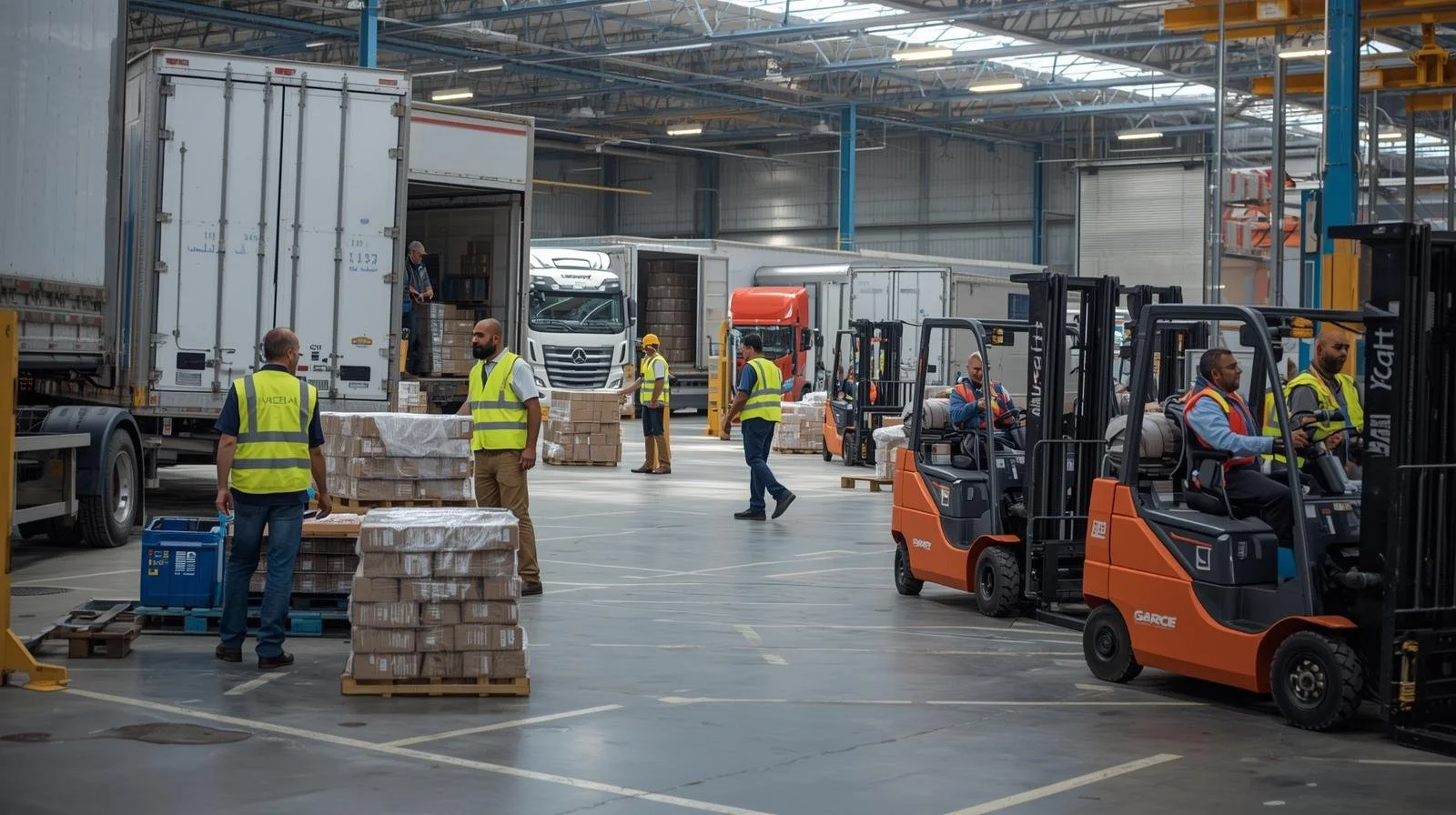
The cross docking process requires strategic planning for smooth implementation. Orders need to arrive at the distribution center or storage facility at the same time for immediate distribution. Before products even arrive, an arrival time must be scheduled in advance to ensure it aligns with another truck for immediate transfer.
When the products arrive, they are classified, recorded, and inspected for any damage or spoilage. Proper records of each product ensure that nothing gets lost during the cross docking phase of delivery. Products are then immediately repackaged and loaded onto a new truck to continue on with their delivery journey.
Benefits of Cross Docking
The advantages of cross docking solutions begin with efficiency.
Not having to store products in a warehouse reduces the time it takes to get products to their final destination. Fasting shipping also leads to cost savings, as those products spend little to no time in a warehouse. Spending no time in a warehouse leads to reduced costs typically incurred through inventory storage, as warehouse management fees and labor costs are reduced.
When products get to their destination faster, there is a lower risk of spoilage and product damage. The longer they are kept in storage, the most risk there is to the products. Especially for perishable items, cross docking reduces risk of product expiration or other damage.
Industries That Use Cross Docking
Cross docking benefits certain industries more than others. The most common industries that benefit from cross docking include:
Retail
E-commerce
Pharmaceuticals
Food and beverage
Manufacturing
The rapid delivery of cross docking, as well as the cost efficiency, helps scalable companies and companies in need of meeting customer demands. For example, in retail, trends are constantly changing. To gain a competitive edge, companies need rapid order fulfillment and reduced lead times while reducing inventory costs where possible. In another example, certain foods and beverages, like dairy and produce, have a reduced shelf life. The sooner they can get from the distributor to the consumer, the better.
That being said, cross docking is not limited only to these five industries. Cross docking is also used in the automotive industry, consumer electronics industry, agriculture industry, and many more.
Cross Docking Example Products
To fully understand where cross docking is most beneficial, take a few example products.

Cross docking is most beneficial for products that don’t need long-term storage. In one example, take high-volume consumer goods. Products like toilet paper, cleaning supplies, and even certain popular bottled beverages are all products that companies go through quickly and are always in demand. Restocking inventory at an efficient pace helps companies always meet this demand. Certain instances, like a bad snowstorm in the forecast, may arise that causes consumers to stock up on essentials more than they usually do. Cross docking helps companies stay readily equipped to handle high demand.
Cross docking is also most beneficial to products that don’t have a long shelf life. Perishable goods are the best example of this. Dairy and produce don’t last long on a shelf before their expiration date. In addition, consumers want the freshest, longest lasting version of that product, knowing that it doesn’t last long in their refrigerator.
Holiday and seasonal items are another example of products that benefit from cross docking. Only during certain times of the year, these products are in high demand. Companies need to be prepared for that short, high-volume burst of consumers all looking for the same products.
If your business is looking for cross docking services, Auge Co. Inc. is here to help. Contact us today to schedule your cross docking needs.
